Problem: A Dense Board Experiencing Poor Yields Driving System Failures
Microboard’s customer with a Department of Defense program was experiencing excessive fallout on a complex board that was part of critical equipment intended to save soldiers’ lives on the battlefield. This printed circuit board assembly (PCBA) was being manufactured by a competitor to Microboard. Part of a five-board suite of PCBAs in an upper-level assembly, the failures on this complex board were driving system level fallout of 60-70% after burn-in. Our customer was performing costly system level troubleshooting and rework, while delivering unacceptable overall program performance. Microboard was successfully delivering the other four PCBAs in the upper-level assembly with excellent yields, so the customer asked Microboard to evaluate the situation.
Description of the PCBA
The Microboard team was challenged to figure out why this board exhibited such a high failure rate, featuring multiple random failures across any given assembly. To give a sense of its complexity, below are some of its characteristics:
- 28-layer dense bare PCB
- .060 inch thick board
- Double sided ENIG board
- Over 20 ounces of copper
- 2500 total component placements
- FPGA in a large 1930 ball BGA
- Over 40 QFNS, DFNS and fine-featured components
Description of Symptoms
Symptoms
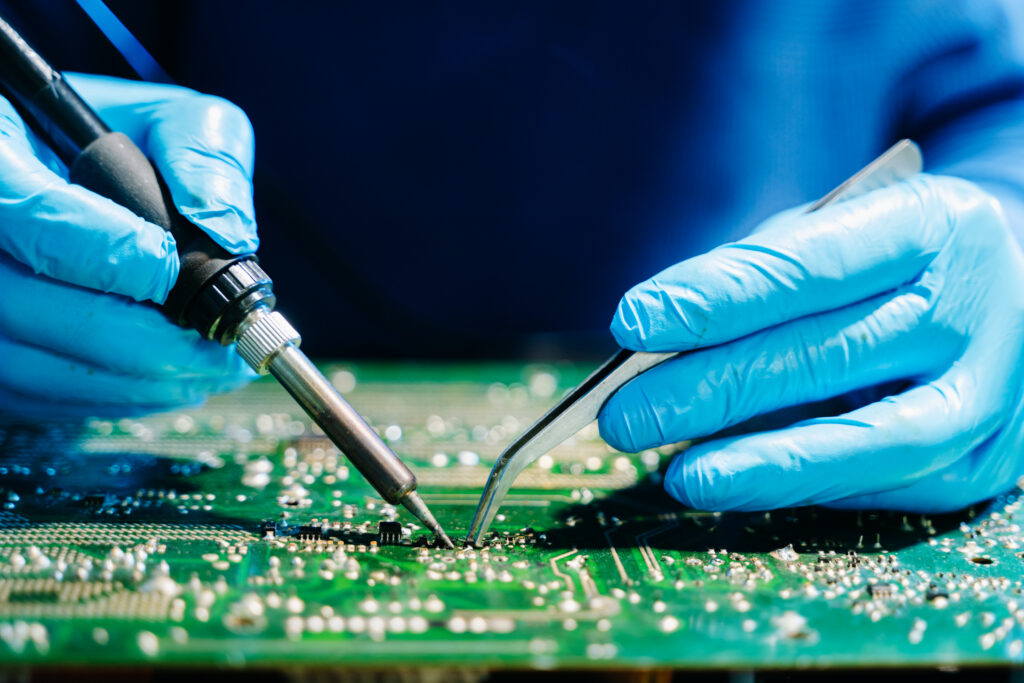
- The customer was removing and replacing suspect components using additional flux and achieving good test results, but still experienced random failures across the PCBA
Investigation
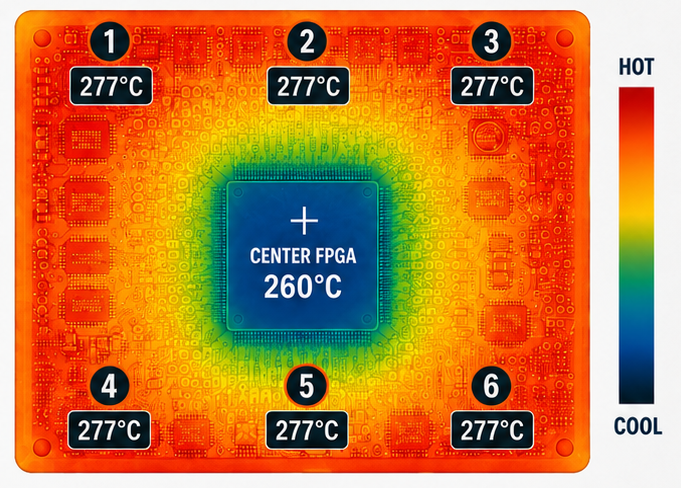
- Microboard drilled out the board across the top and bottom of the assembly and installed 6 thermocouples & discovered a 17-degree temperature delta from the center of the FPGA compared to the rest of the board
Solution
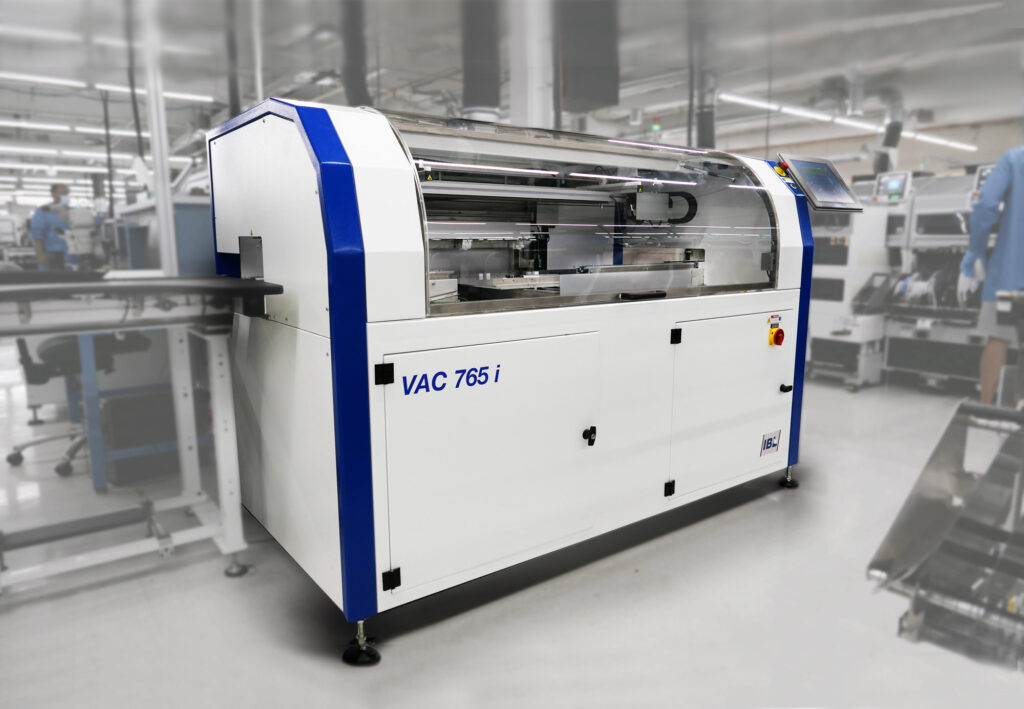
- Invested in state-of-the art vapor phase machine & reduced temperature deltas down to 1-2 degrees
- Achieved a void reduction of 40% down to less than 5% on critical components
Vapor Phase Overview
Microboard reached out to IBL as well as other partners in the industry with vapor phase expertise. Microboard’s engineers visited several sites to perform process experiments and to develop reflow validation. Based on successful results using vapor phase reflow, Microboard proceeded to invest in IBL’s VAC 765i. Within three weeks of delivery, Microboard was in a position to execute control builds, develop a new reflow profile using vapor phase technology, and demonstrate preliminary results.
Advanced Capabilities
- Vacuum chamber design minimizes voiding and improves solder joint integrity, ensuring consistent thermal performance
- Intelligent Profiling System enables precise temperature control across assemblies
- Maintains extremely tight thermal uniformity across complex PCBAs
- Handles high-mix production environments with ease
- Includes automation features such as automatic lane adjustments and integrated thermal profiling
- Reduces overall energy consumption compared to traditional convection ovens
- Supports dense, multi-layer boards (28-layer PCBAs with 2500+ components)
- Capable of processing complex BGAs (up to 1930 solder balls) with consistent results
- Operates in an oxygen-free (inert) environment, eliminating the need for nitrogen
Microboard Validation
The IBL Vacuum Inline Reflow Vapor Phase Soldering Oven offered unparalleled soldering quality, achieving a void reduction from an initial 40% to less than 5% on critical components such as QFNs and BGAs. This level of performance was pivotal in meeting the reliability standards demanded by our customers’ defense applications.
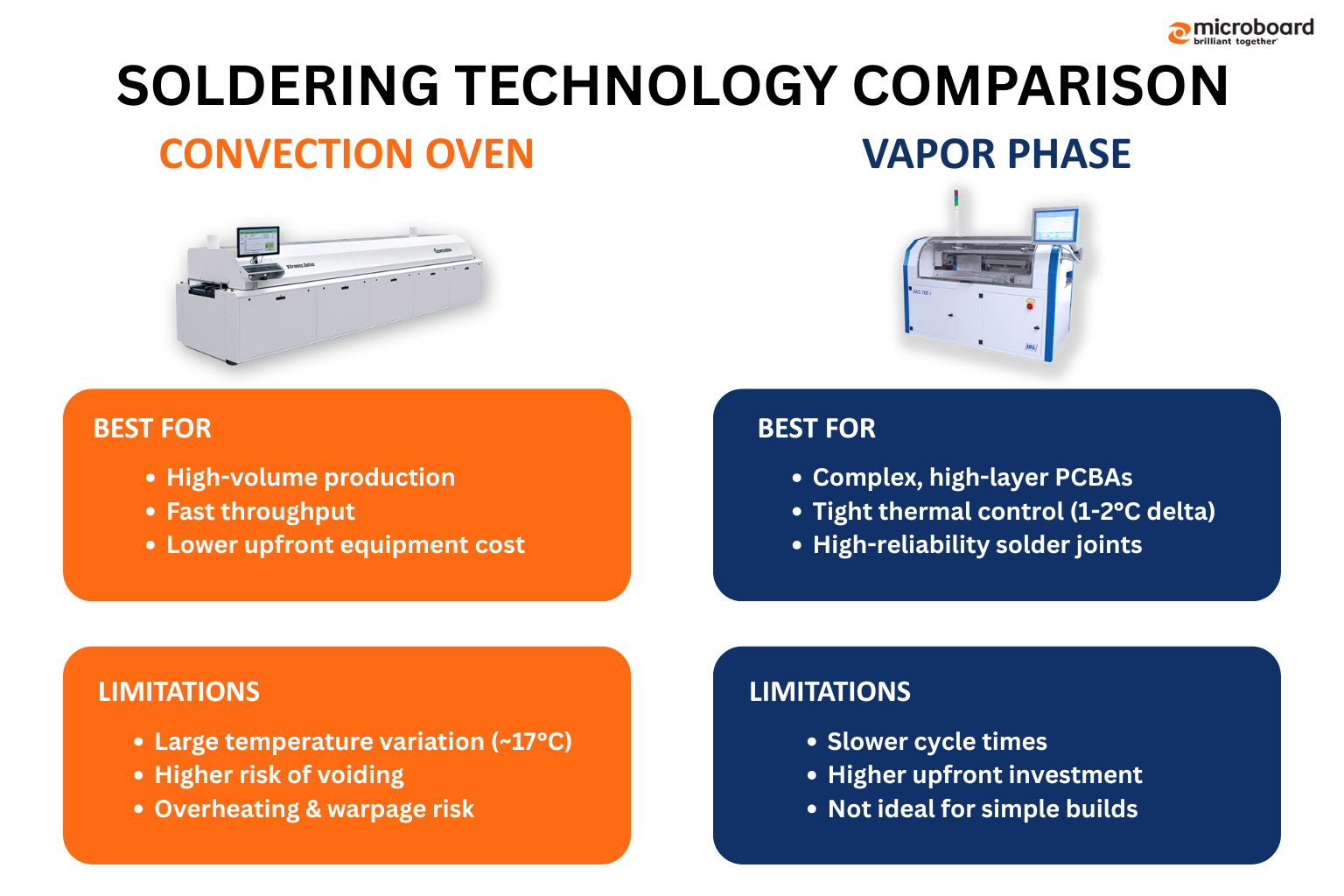
The patented vacuum chamber ensured superior solder joint integrity by minimizing voids and maintaining consistent thermal performance. The Intelligent Profiling System allowed Microboard engineers to finely control temperature profiles, reducing temperature deltas across assemblies to just 1-2 degrees, compared to the 17-degree variance observed during the initial convection oven process. This precision mitigated risks such as overheating and warpage, critical for maintaining component reliability across the dense 28-layer PCBA.
Designed for versatility, the Vapor Phase machine seamlessly managed the high-mix requirements of Microboard’s production line. Its capacity to handle dense, multilayer boards with over 2500 components—including BGAs with 1930 solder balls—enabled consistent results across assemblies regardless of complexity. Additionally, operating within an inert, oxygen-free atmosphere eliminated the need for nitrogen and contributed to the cost reduction of approximately 20% compared to traditional reflow methods.
Automation features, such as automatic lane adjustments and integrated thermal profiling, supported a first-pass yield improvement to 96%, significantly reducing rework and scrap rates. These capabilities, combined with a 15% lower energy consumption compared to convection ovens, contributed to a more efficient and sustainable manufacturing process.
By incorporating this innovative solution, Microboard delivered a repeatable process that ensured consistent product quality and reliability, solidifying its position as a leader in high-quality manufacturing for mission-critical applications.
Outcome: Program Success
The customer was thrilled with Microboard’s results. Their Program Manager said, “We engaged Microboard who recommended we change to one of their trusted fab shops and make several other changes, including moving to the vapor phase process instead of standard convection. These changes have increased yields at the circuit card level, but more importantly, have enabled us to greatly reduce fallout on our fully assembled unit through final production, which includes Environmental Stress Screening (ESS). Microboard was a key partner in solving our yield problems and helped us achieve program success.”