
Challenges in PCBA Pre-Production Efficiency and Quality Control
Printed circuit board assembly (PCBA) pre-production defines everything that happens before a board hits the surface mount technology (SMT) line: Gerber file intake, design for manufacturability (DFM) checks and incoming inspection, steps that have long hinged on the accuracy of customer-supplied documentation. However, the actual fabricated boards often do not match the original design files due to manufacturing variations, board stretching, over-etching, and other fabrication tolerances, causing undetected defects that surface during production runs.
Microboard sought to eliminate stencil and PCB-induced defects before transitioning to SMT production. The objective was to introduce a front-end inspection process that could verify tooling against original CAD data with unmatched accuracy and speed, reducing rework, improving first-pass yield, and cutting downtime.
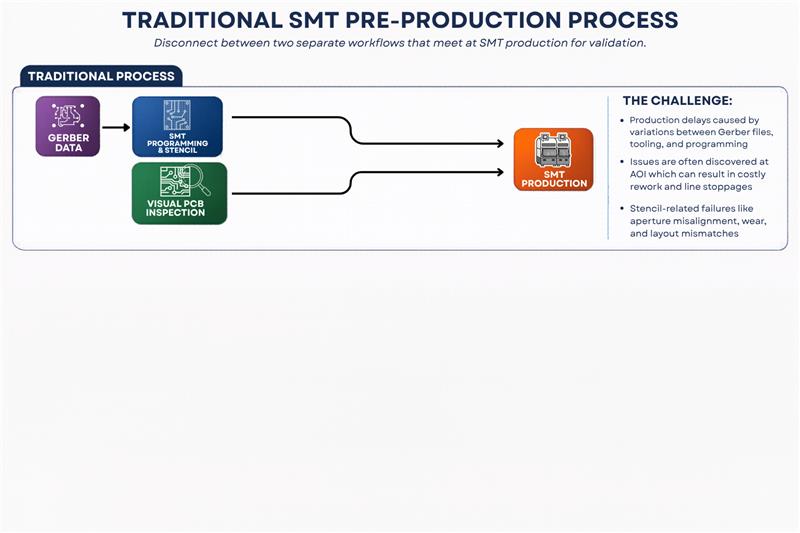
Common Pitfalls in traditional PCBA pre-production processes
The traditional approach is no longer sufficient to keep pace with the growing complexity of high-density PCB assemblies. This is especially true in low- to mid-volume production environments that incorporate fine-pitch components such as 12-mil pitch parts, QFNs, micro-BGAs, and bottom-terminated components smaller than 0201. In many cases, manufacturers still rely heavily on manual inspection and board shop data for pre-production verification. However, this fragmented and labor-intensive approach introduces risk and inefficiency, often leading to:
- Stencil-related failures like aperture misalignment, wear, and layout mismatches
- Costly rework and line stoppages during early builds
- Missed defects due to human error and visual limitations
- Production delays caused by variations between Gerber files, tooling, and programming.
Advanced SMT Pre-Production Process with ScanCAD
Microboard identified ScanCAD as the ideal technology to bring in-house validation under their control. As part of their front-end process control strategy, the goal was to inspect bare PCBs and SMT stencils before paste application—ensuring accurate, defect-free tooling from the start. Microboard integrated ScanCAD into its front-end PCBA workflow.
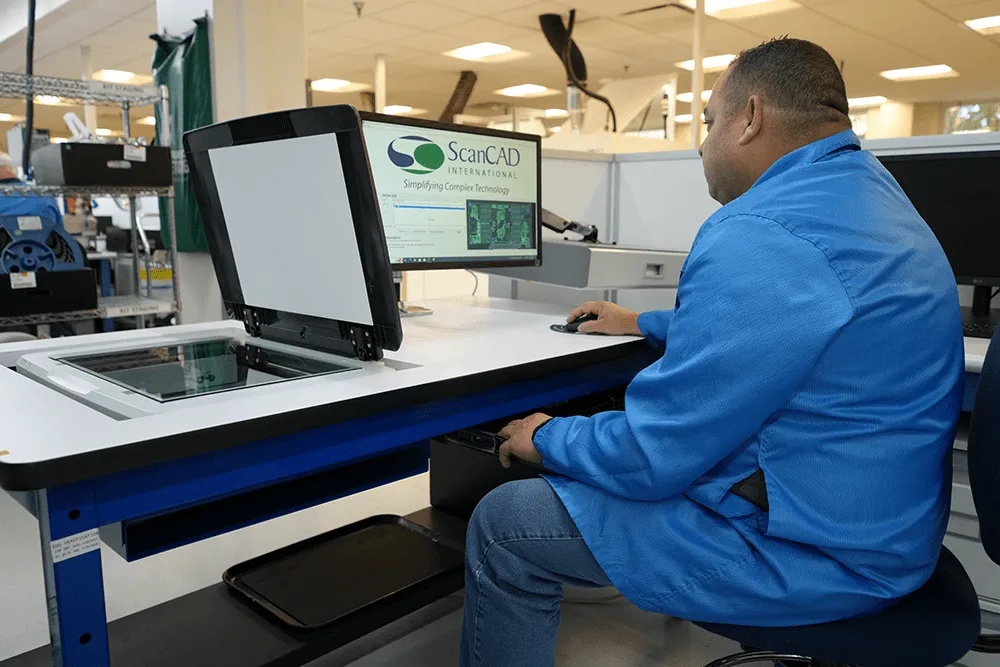
Key Advantages of ScanCAD Inspection
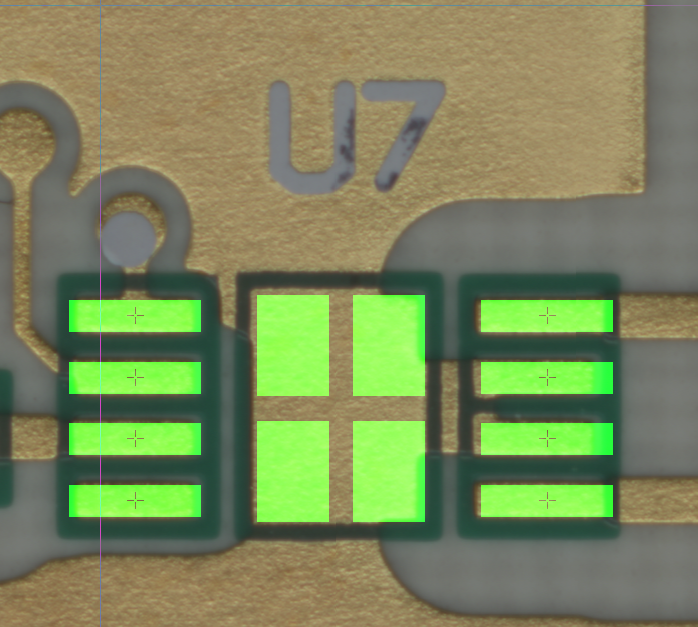
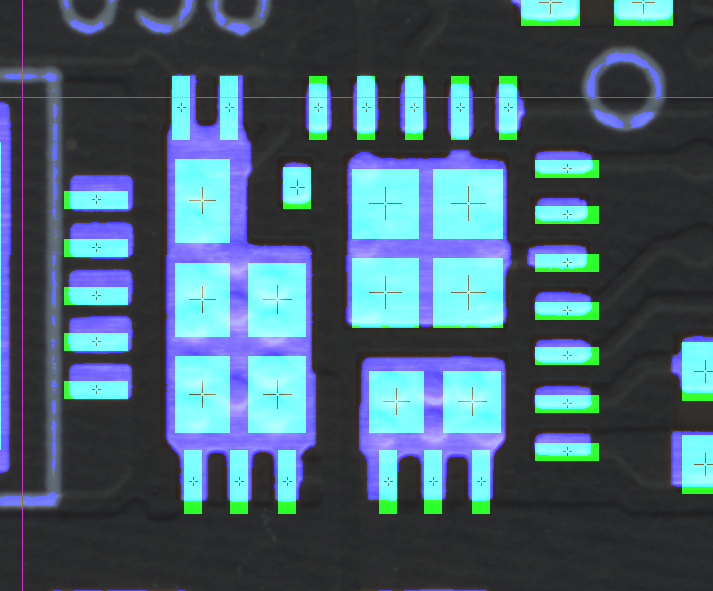
- Automated Defect Detection: The system automatically identifies board stretch, over-etching, solder mask inefficiencies, and array data placement variations. Manual inspection processes miss these subtle defects, especially on complex boards with fine-pitch components.
- Digital Traceability & Quality Control: Creates a permanent digital record of every pre-production inspection, including high-resolution images and detailed component measurements. This record provides verifiable proof of compliance with industry standards and enables faster root-cause analysis when quality issues arise.
- Early Design Feedback Loop: Visual confirmation of pad placement accuracy and spacing enables early identification of potential soldering problems. Manufacturers can provide timely feedback to customers about design flaws before production begins, rather than discovering issues mid-run.
Why is ScanCAD Important for Modern PCB Assembly?
- Fewer Production Defects on Complex Assemblies: Catching board stretch, etching variations, and array placement errors before component placement prevents SMT line shutdowns and rework that would otherwise cost upwards of 10% in overall production costs.
- Shifting from Reactive to Proactive Quality Control: Traditional reliance on board shop data means problems surface during production runs. ScanCAD moves inspection earlier, enabling manufacturers to validate bare FABs before any value-added assembly work begins.
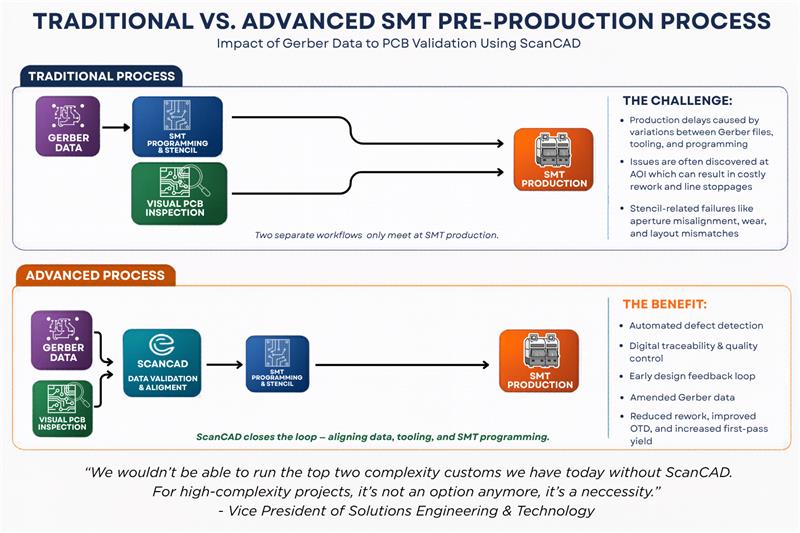
- Necessity for Highly-Complex Assemblies: As technology advances toward smaller pad and part sizes, tighter tolerances, and denser component placement, visual inspection alone becomes insufficient. ScanCAD provides the precision measurement and automated detection capabilities required for modern high-reliability assemblies.
Key Results
- Up to 85% of stencil-related defects were prevented
- Stencil replacement frequency reduced by 80%, extending tool life
- Significant reduction in pad registration errors and print defects
- Tighter process tolerances across high-density, high-complexity assemblies
- Improved first-pass yield (FPY) and reduced scrap during initial builds
Microboard: Raising the Bar on Pre-Production Quality
ScanCAD has transformed how Microboard ensures accuracy and repeatability at the earliest stage of electronics manufacturing. By detecting and eliminating tooling errors before solder paste is applied, the company ensures consistent build quality, reduces downtime, and meets the stringent standards of its high-reliability customers.


Interested in learning more about our capabilities? Click the button to contact us today!